The quiet end of manual tagging.
For thirty years the deal was the same: if you wanted to find a file later, you had to describe it now. That deal is off.

Every creative team I've ever worked with has the same drawer. It might be a shared drive, a folder named FINAL_v3_USE_THIS, or a NAS humming in a closet — but it's the same drawer. It fills faster than anyone can label it, and one day someone goes looking for a photo they know exists, knows they shot, and cannot find. The asset isn't lost. The description of the asset was never written down.
For as long as we've kept files, the bargain was simple and unspoken: the cost of finding something later is paid up front, by hand, the moment you save it. Name it well. Tag it. Drop it in the right folder. Skip that work and you haven't saved time — you've borrowed it, at interest, from your future self.
The cost was always hidden.
The reason manual tagging never dies is that its cost doesn't show up where you can see it. Nobody bills you for the forty-five minutes spent scrolling for the orange-cliffside shot from that trip to Portugal. Nobody itemizes the re-shoot you commissioned because the original was technically in the archive but practically invisible. The tax is real, but it's paid in a thousand small withdrawals that never appear on the same line.
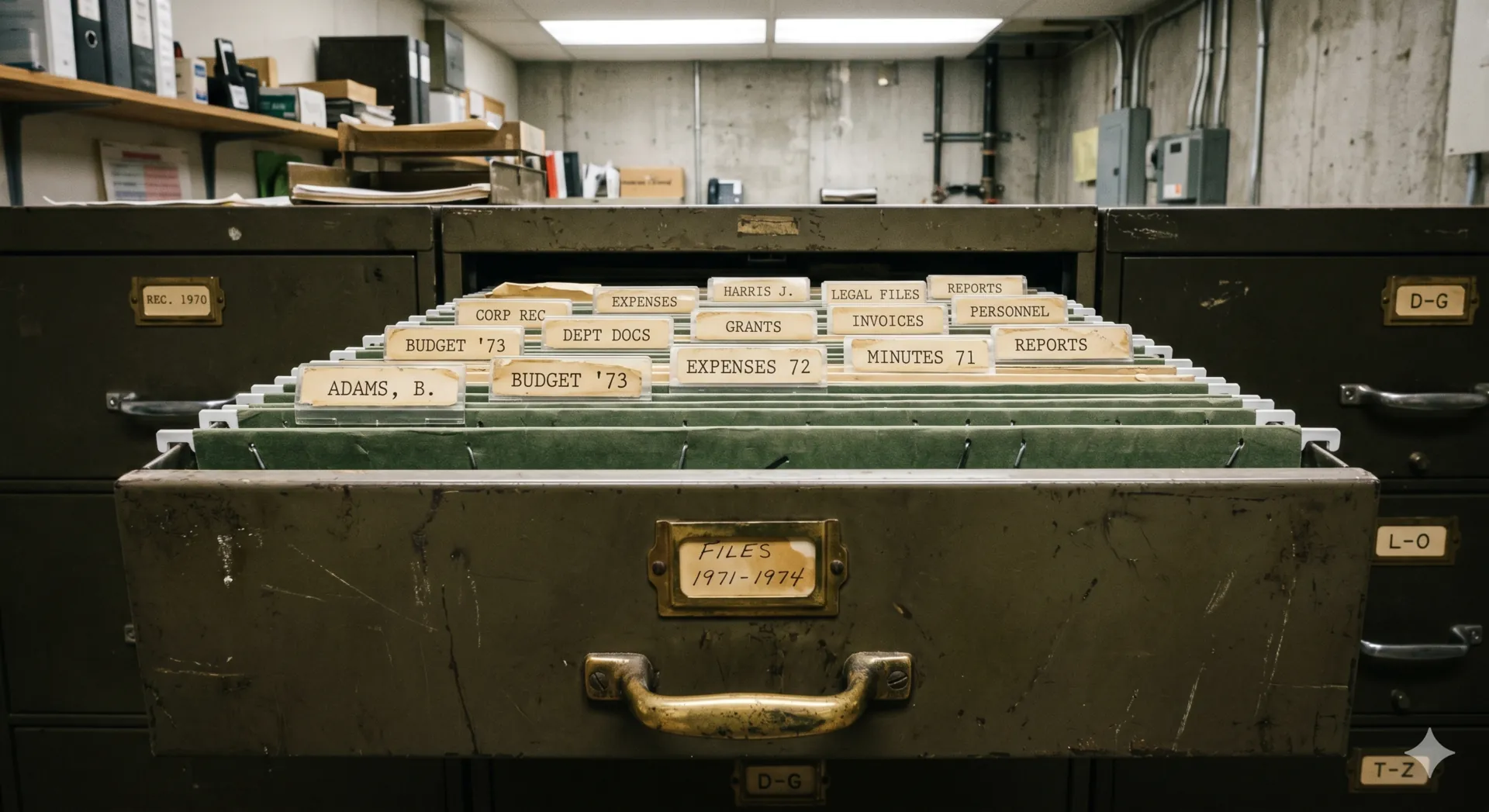
So teams build systems to manage the tax instead of removing it. A naming convention. A folder hierarchy three meetings in the making. A spreadsheet mapping campaigns to quarters to usage rights. These hold up beautifully — right up until a second person touches them, or the person who wrote them leaves, or the work simply outpaces the discipline. A taxonomy maintained by hand is only ever as good as the most rushed afternoon of the busiest person on the team.
A naming convention is a tax on the future.
Here's the part nobody says out loud: the file already knows what it is. The orange cliffside is in the image. The golden-hour interior, the indigo fabric, the brutalist staircase — every fact you'd ever type into a tag field is sitting right there in the pixels, waiting. The only reason a human ever had to transcribe it was that, until very recently, a machine couldn't read a picture. That constraint is gone. We just haven't finished noticing.
The file already knows what it is. We spent thirty years typing it back to ourselves.
When the description becomes free — generated the moment a file lands, with no one assigned to it — the whole economics invert. You stop organizing in anticipation of search and start searching whatever you happen to have. The library doesn't need to be tidy. It needs to be legible, and legibility is now something you can buy in bulk, applied evenly across every asset, the careful ones and the dumped-from-a-card ones alike.
What changes when the description is free.
The obvious win is search: you describe what you remember — "portrait, side street, overcast" — and the thing appears. But the quieter, larger win is that the grunt work that used to gate everything else simply evaporates. The cull, the keyword pass, the "someone needs to tag the Q3 shoot before we can share it" — that bottleneck stops existing. Not because someone finally found time for it. Because it was never work a person needed to do.
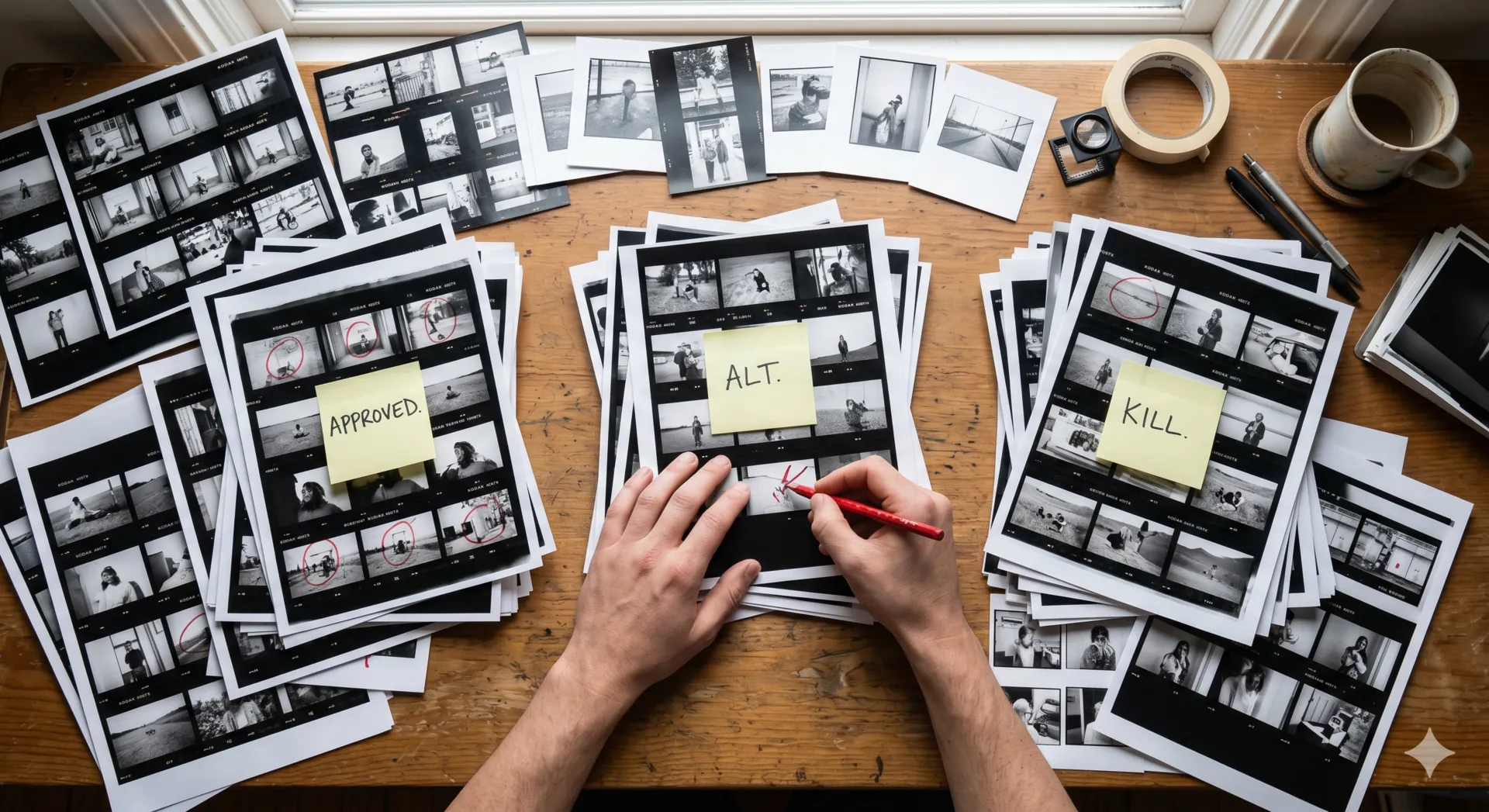
To be clear about what doesn't change: judgment. Which frame is the hero, which crop tells the story, what belongs in the deck and what gets killed — that's taste, and taste isn't a metadata problem. The machine doesn't choose. It describes, completely and tirelessly, so the choosing happens over a library you can actually see. The red pencil stays in your hand. You just stop spending it on filing.
The library that tends itself.
This is the whole idea behind what we're building. You set the structure once — the trunk of the tree, the way your team thinks about its work — and from then on every new upload sorts itself under the right branch, described in full, before you've even closed the upload dialog. When a category genuinely belongs that isn't there yet, it gets proposed, not imposed. No tagging committee. No naming-conventions doc. No one stuck deciding where new things should live.
Manual tagging doesn't vanish in a single dramatic moment. It just becomes the exception — the rare deliberate note a human adds on purpose, rather than the silent toll every file used to demand. That's the quiet part. The drawer still fills as fast as ever. It just stops swallowing things whole.
Field notes from VDAM — written by a human, illustrated by the archive.